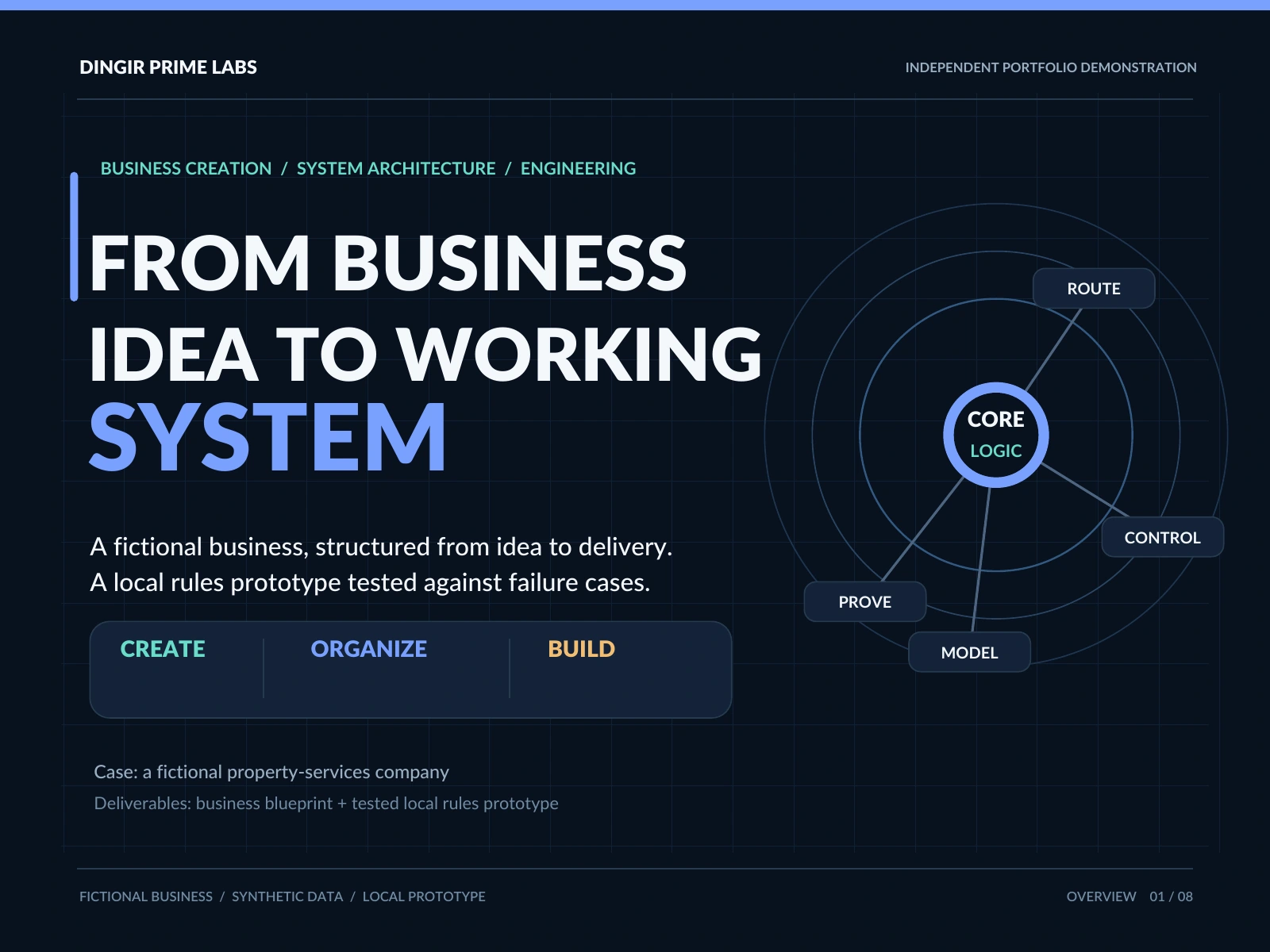
Systems in practice

Evidence Library.

Explore the thinking, the architecture, and the evidence behind the work. Client case studies, original builds, and clearly labeled demonstrations, each with its own story.

Two forms of proof

Know what you are looking at.

Case studies show what was actually designed, implemented, tested, packaged, or deployed in a real build or engagement. Architecture demonstrations show how Dingir Prime Labs reasons through a representative problem.

Both can reveal structure, but they are never presented as the same kind of evidence. Each item states its context, claim boundary, and implementation state.

Published case studies

The projects.
The evidence behind them.

Case studies may cover original product builds or eligible client engagements. Designed, specified, implemented, tested, packaged, staged, and deployed are never treated as interchangeable claims.

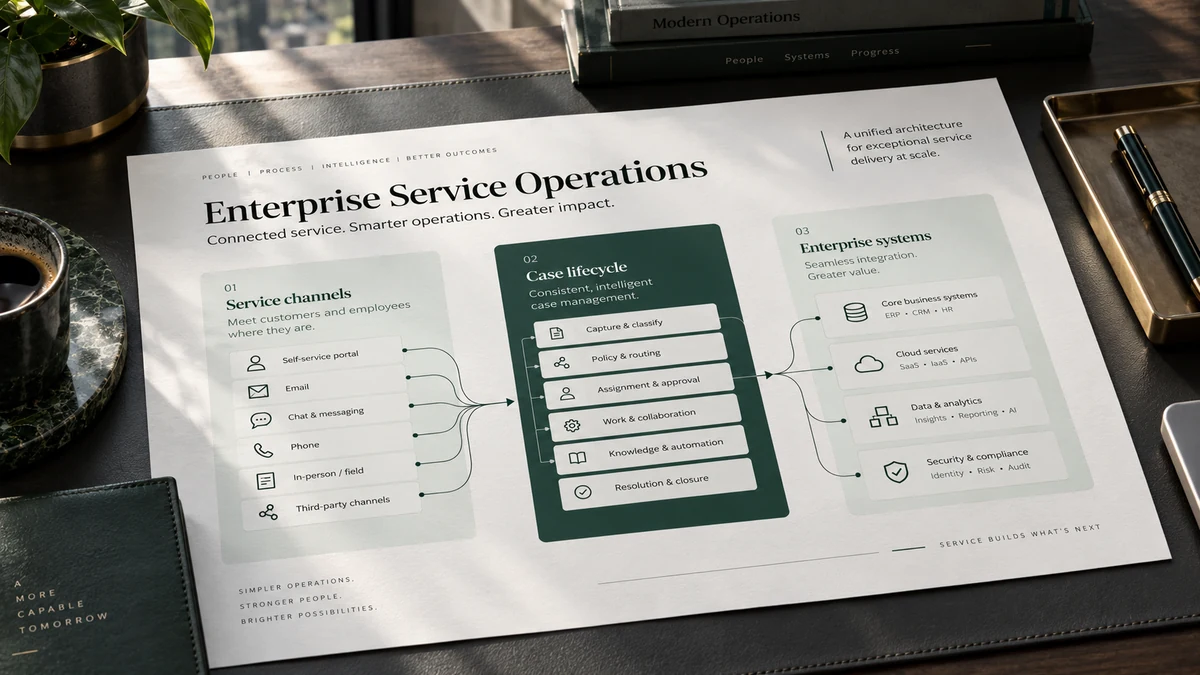
Redacted architecture overview for a confidential enterprise service operations engagement.

Case study / Confidential client engagement

Enterprise Service Operations Platform

A governed Phase 1 architecture and implementation handoff for complex service operations spanning workflows, knowledge, policy, approvals, external actions, recovery, and durable evidence.

CLIENT_ENGAGEMENTSPECIFIEDREFERENCE_IMPLEMENTEDTESTED_36_OF_36NOT_DEPLOYED

Client identity and sensitive implementation details are withheld. Public evidence is limited to verified, redacted material.
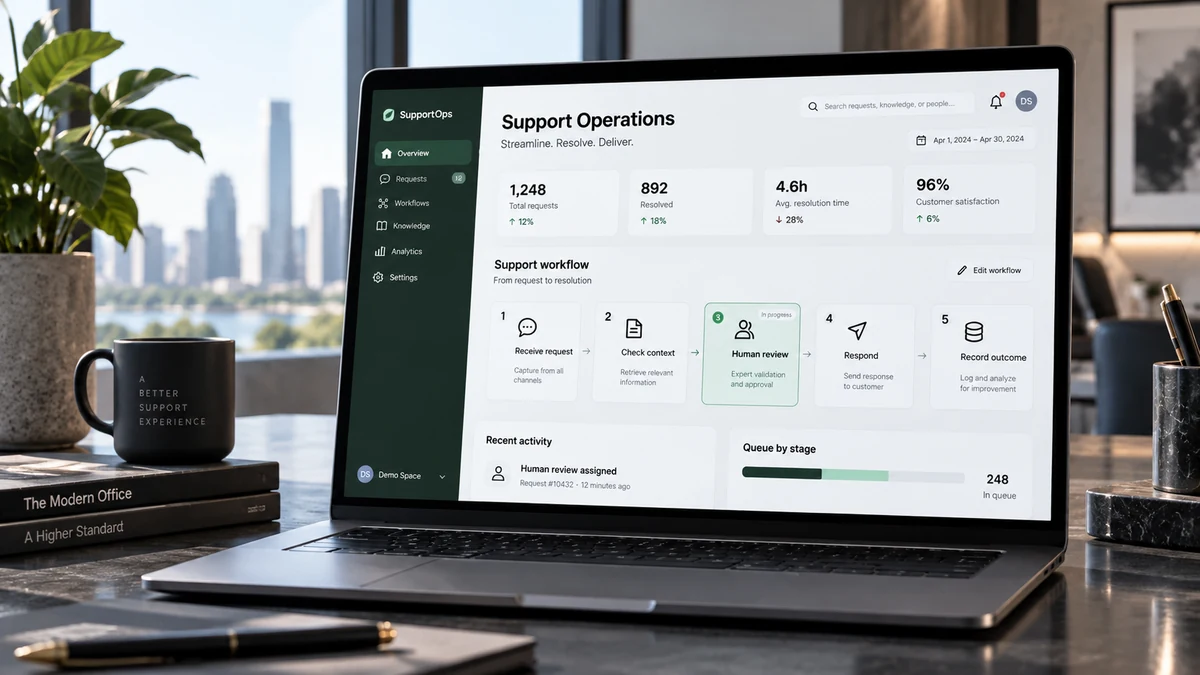

Publication standard

Every case study will answer the same critical questions.

This structure makes future case studies easy to compare while protecting client confidentiality and keeping the evidence honest.

The Problem
What Was Missing
What We Designed
Inside the Architecture
Deliverables
Visual Evidence
Verified Outcome
Implementation State

Additional case studies will receive dedicated pages when their evidence and publication boundaries are ready.

Architecture demonstrations

Six scenarios.
Six ways to think it through.

Each demonstration is intentionally broad enough to reveal the system behind the surface request. No demonstration is presented as a client engagement or deployed result.

ScenarioFictional demonstration
Client claimNone
PurposeShow architecture reasoning
Demonstration / Intelligent intake

Client Intake and Qualification Brain

A service business wants consistent discovery, better-fit leads, and less manual triage without letting automation make unsupported commitments.

  • User and intake-mode architecture
  • Required context and evidence rules
  • Qualification, scoring, and routing logic
  • Human review and escalation triggers
  • Structured summary and recommendation contracts
  • CRM, scheduling, and handoff specification
Demonstration / Operating system

Founder-Independent Delivery System

An expert-led company needs client work to remain consistent when delivery moves from the founder to a team.

  • Current and future workflow maps
  • Roles, decision rights, and approvals
  • Signature method and SOP structure
  • Client communication and artifact standards
  • Quality, exception, and recovery rules
  • Training and operating cadence
Demonstration / Product blueprint

Developer-Ready Intelligent Product

A founder has a compelling software idea, but the feature list does not explain what the product should know, decide, or do.

  • User roles, jobs, and journey states
  • System brain and behavior model
  • Feature, workflow, and data requirements
  • Knowledge, tools, memory, and permissions
  • Output, failure, and governance contracts
  • MVP roadmap and acceptance scenarios
Demonstration / Business IP

Signature Method and Offer System

A consultant wants to turn years of judgment and informal delivery into a method that can be sold, taught, licensed, and repeated.

  • Principles, stages, and decision models
  • Terminology and intellectual property map
  • Audience, promise, scope, and boundaries
  • Offer ladder and qualification logic
  • Delivery, evidence, and quality system
  • Training, licensing, and version governance
Demonstration / Knowledge and governance

Source-Bound Policy Assistant

An organization needs fast answers from internal policy without invented guidance, stale sources, or hidden uncertainty.

  • Source authority and conflict hierarchy
  • Taxonomy, metadata, and ownership
  • Retrieval, citation, and no-answer behavior
  • Role permissions and sensitive topics
  • Human review and specialist escalation
  • Freshness, testing, logging, and change control
Demonstration / Cross-domain

Connected Operations Control Plane

A complex operation combines equipment, software, field teams, alerts, vendors, and high-consequence decisions.

  • Mission, environment, and operating modes
  • Component and responsibility architecture
  • Signal, data, and interface contracts
  • Decision authority and stop conditions
  • Failure, degraded operation, and recovery
  • Specialist verification and acceptance plan

Technical evidence

Proof is visible. Proprietary architecture stays protected.

Selected architecture artifacts, redacted diagrams, and implementation evidence are available during qualified project discussions. Detailed blueprints and proprietary system logic are not published publicly.

Controlled accessDetailed artifacts are shared only during qualified project discussions.

Access may be limited, watermarked, or subject to appropriate confidentiality terms.

The recurring pattern

Different needs.
Connected principles.

The visible request changes. The architecture questions remain: what is the system for, who uses it, what does it know, how does it decide, what can fail, and what proves it works?

Define the system

Purpose, context, people, desired change, constraints, risks, assumptions, and the boundary of the work.

Connect the moving parts

Workflow, knowledge, decisions, roles, data, interfaces, tools, controls, outputs, and operating states.

Make it executable

Specifications, acceptance criteria, tests, responsibilities, implementation sequence, evidence, and handoff.

Your problem will not match a template

Your next project starts with you.

Describe what should exist, what needs to change, what you have today, and what cannot be left to guesswork.

Tell Us What You Need